As part of the projects, activities and other work that the Board undertakes we often produce reports and research papers, which will be made available here.
State Training Plan
The Board's
State Training Plan is a key strategic document that sets out the training needs of the State's industries and how those needs should be met by State Government investment in VET. The Plan complements key State Government priorities, and is informed by training data; labour market analysis; and valuable consultation with industry, facilitated by the Board's network of industry training councils (ITCs). The
State Training Plan 2023-24 was released by the Minister for Training in July 2023.
View the State Training Plan 2023-24
View the Executive Summary here
Mobilising WA's Future: Young people in VET
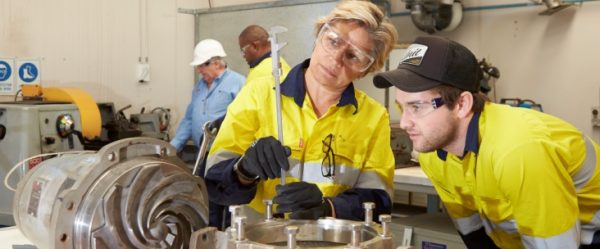
Young people make up almost half of all participants in WA’s Vocational Education and Training (VET) sector. The State Training Board had roundtable discussions with more than 70 young people to gain insight into their engagement and experience in the VET system. The Board’s findings are presented in our Mobilising WA’s Future: Young people in VET report and are focused on the key themes of:
- Engagement and exposure to VET;
- Changing the perception of VET; and
- VET delivery and support.
View the Mobilising WA’s Future: Young people in VET report
Regional Early Childhood Education and Care Report
The State Training Board’s
Regional Early Childhood Education and Care Report was prepared in collaboration with Community Skills WA. It explores issues affecting the early childhood education and care (ECEC) sector in regional WA , and how the training sector may assist to address these.
View the Regional Early Childhood Education and Care Report
Social Assistance and Allied Health Workforce
The Board has undertaken extensive work to develop strategies to guide workforce development in the vital and rapidly growing Social Assistance and Allied Health sector. The
Social Assistance and Allied Health Workforce Strategy (released in 2019) and the
Social Assistance and Allied Health: Future Workforce Skills report (released in 2022) are the culmination of this work and were prepared in collaboration with Community Skills WA.
View Social Assistance and Allied Health: Future Workforce Skills Report (2022)
View State Government Response (2022)
View Social Assistance and Allied Health Workforce Strategy (2019)
Strategies to grow apprenticeships and traineeships in Western Australia
Strategies to grow apprenticeships and traineeships is the culmination of Statewide industry forums hosted by the State Training Board between August 2017 and March 2018. The consultations helped the State Training Board to understand what industry needs from the State’s training sector and inform future strategies. Released 24 January 2019
View Strategies to grow apprenticeships and traineeships
View McGowan Government's response
Youth matters: Youth survey results
The 2015 Youth Matters: Youth Survey attracted more than 1 100 responses from young people aged 12 to 24 across Western Australia. It provides insights into young people’s experiences with school, career advice and employment.
View the survey results
Youth Matters: a study of youth education, training, employment and unemployment in Western Australia
Commissioned by the WA State Training Board, this paper is based on research and consultations undertaken by Business Group Australia and the Board’s Youth Unemployment Steering Committee. It is provided as an introduction to the challenges associated with the transition from secondary education and training to the workplace. It focuses on when young people fail to make a successful transition and the complexities of youth unemployment. It is not intended to provide all the answers but rather to generate discussion and action on this important workforce development issue.
View the full paper